
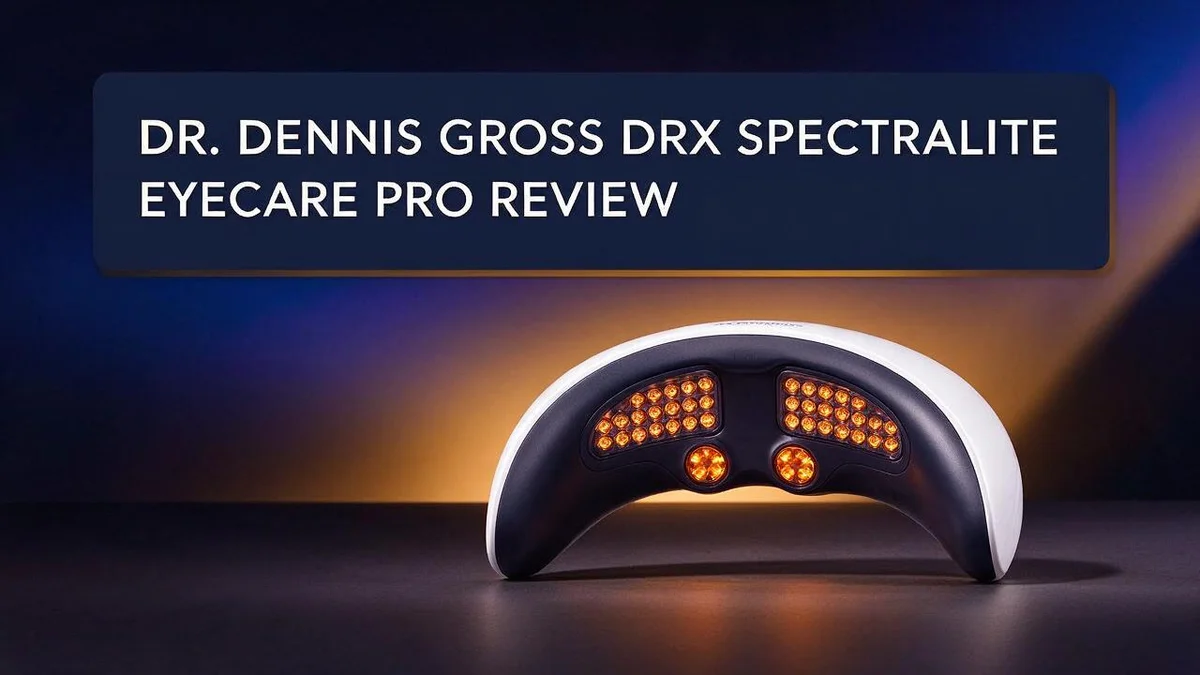
Dr. Dennis Gross DRx SpectraLite EyeCare Pro Review 2026
Dark circles, fine lines, and puffy eyes can make anyone look tired. Many people want a simple fix that fits into a busy day. That is where at home LED light therapy comes in.
The Dr. Dennis Gross DRx SpectraLite EyeCare Pro is an LED device made for the delicate eye area. It launched in October 2017 and sits right over the eyes with a universal fit.
Inside, you will find 72 red and amber LEDs. The routine takes about 3 minutes a day. Keep reading to see how it works, what users report, and whether it deserves a spot in your skincare routine.
In a Nutshell
-
Quick daily routine: Most people need only about 3 minutes each day. That makes it simple to fit into a morning or evening routine.
-
Built for the eye area: The device rests over the delicate skin around your eyes. It fits most face shapes without much fuss.
-
Claimed skin benefits: The brand says it can help smooth the skin and give it a firmer look. Results vary from person to person.
-
Possible early irritation: Some users notice itchy or swollen eyes when they first start. This feeling often settles as the skin adjusts.
-
Skin reactions to watch: Reviewers of the sister FaceWare Pro mention small pimples after red light sessions. Keep track of your skin during the first few weeks.
-
Limited independent data: Solid long-term reviews are hard to find. Talk with a dermatologist first if you have sensitive eyes or an existing skin condition.
Light Technology and Wavelengths

- WHAT IT IS: Dermatologist-developed and FDA-cleared, this LED eye device builds natural elasticity to firm skin, reduce wrinkles, crow’s feet, puffiness, and dark circles, while lifting the appearance of the brow.
- HOW IT WORKS: Four wavelengths of red light stimulate collagen production to treat wrinkles, firm skin & even tone around the eyes. This hands-free device utilizes 96 targeted LED red lights to treat the results of aging eyes in 3 minutes a day.
Last update on 2026-11-21 / Affiliate links / Images from Amazon Product Advertising API Some of the links on this website are affiliate links, which means that at no additional cost to you, I earn a commission if you click through and make a purchase. I only recommend products and services that I believe will add value to my readers. Thank you for your support!
Light sits at the core of this device. Each color of light carries its own wavelength. Wavelength affects how far the light can travel beneath the skin’s surface.
Red light is the most talked about color. Light in the red range falls roughly between 630 and 660 nanometers. Many LED therapy brands use this range because it reaches the upper layers of the skin.
Amber light sits in a different spot. Its wavelength is close to 590 nanometers. It sits between red and yellow on the color scale. Brands often pair amber with red for a wider effect.
Each wavelength interacts with skin in its own way. Red light is often linked with cell activity and firmness. Amber light is often linked with redness and uneven tone.
Light does not work like heat. LED panels stay cool during use. The light works near the surface rather than through heat. This gentle approach explains why LED light is popular at home.
The skin around the eyes is thin and delicate. Thin skin may respond differently than skin on the cheeks. That is one reason many people start with short sessions and watch how their skin feels.
Light needs time to work. Skin cells respond slowly over weeks, not days. Steady use matters more than one long session. Many users take weekly photos to track changes.
Science has limits here. Most LED studies test other devices or small groups. Research on this exact device is still thin. Keep your expectations realistic and read the label carefully.
Eye safety matters with any light device. Keep your eyes closed during each session. Follow the manufacturer’s directions for timing and distance. If redness or discomfort lasts, pause and speak with a doctor.
In short, color and wavelength shape how this device behaves. Red and amber light each play a distinct role. Many people find the color choice simple to follow. Knowing these details helps you build a routine that fits your skin goals.
Fit and Eye-Area Coverage
Fit matters more than most people think. A good fit helps light reach the skin you want to treat. A loose or crooked device can leave gaps where light escapes.
The brand describes a universal fit. That means one design is meant to suit many face shapes. Still, every face is different, so check how it sits before each session.
Start by looking in a mirror. Make sure the device covers the full area under your eyes. Check that the edges sit flat against your skin without lifting.
Look for even contact along your cheekbones too. Gaps there can reduce how evenly the light spreads. Even contact helps you get a consistent session each day.
Pay attention to the inner corners. The area near your nose bridge can be tricky. Press gently on the edges to see if the device shifts. Small gaps near the tear ducts may need a quick adjustment.
Coverage matters too. Some people carry tension in the brow or forehead. Relax your face before you place the device. Tight muscles can push the edges up and reduce contact.
Keep your lashes in mind. Long lashes may brush against the light panel. Gently comb them upward before use. This simple step helps the device sit smoothly.
Lying down often gives the best position. Rest your head on a pillow with your neck relaxed.
Take a moment to settle in before you start. Good fit also makes the routine feel easier. Keep your eyes closed the whole time, and avoid rubbing or pressing the device once it sits in place.
Sizing can feel different from day to day. Puffiness may make the surface feel uneven. If the fit feels off on puffy mornings, try again later in the day when swelling fades.
Finally, stop if the device feels tight, pinches, or causes discomfort. A proper fit should feel light and calm. Remove it right away if you notice redness or swelling that lingers.
Daily Routine and Ease of Use
Daily use decides whether this device fits your life or ends up in a drawer. The DRx SpectraLite EyeCare Pro works best when you build it into a routine you already enjoy.
Start by choosing a fixed time. Many people pair their session with brushing their teeth or winding down at night. Habits stick when they follow something you already do.
Morning or night is your call. Night sessions can feel calming. Morning sessions can fit neatly into getting ready. Either choice works if you stay consistent.
Set up a simple spot before you begin. Keep the device near your sink, nightstand, or favorite chair. Having it ready saves you from searching for it on a busy day.
Think about your skincare order too. Cleanse and dry your face first. Many people find it easier to apply their serums and moisturizer afterward.
Ease of use matters on tired days. Reviewers of the sister FaceWare Pro say the mask holds up well to handling and travel.
That durability makes it easy to pack for a weekend trip. Reviewers also praise the battery life, so you can skip constant charging.
Keep the panel clean between sessions. Wipe it gently with a soft cloth and avoid harsh cleaners. Check the manual for the brand’s own cleaning tips, since those always come first.
Plan for missed days, too. Life gets busy, and one skipped session does not mean you failed. Just pick up again the next day and keep going.
Tracking helps you stay on course. Snap a photo once a week in the same lighting. Looking back over several weeks shows changes that daily mirror checks often miss.
Small habits add up. A simple routine, a ready spot, and gentle care make this device far easier to live with.
Top 3 Alternatives
If you want a different light therapy option, these three choices stand out. Each one offers its own approach to at-home skin care. Read on to see which one fits your routine.
Foreo UFO 2

- 5 X FASTER WARMING + HYPER-INFUSION An anti aging light face mask device marries 5 x faster warming with massage to boost absorption of skincare actives deeper for max results.
- FULL SPECTRUM LIGHT Light with 8 colors to visibly refine the complexion & satisfy all skin needs for effortless pro-level face mask skin care results at home, every time.
Last update on 2026-11-21 / Affiliate links / Images from Amazon Product Advertising API Some of the links on this website are affiliate links, which means that at no additional cost to you, I earn a commission if you click through and make a purchase. I only recommend products and services that I believe will add value to my readers. Thank you for your support!
The Foreo UFO 2 uses red and near-infrared light to support a healthy glow. It also pairs light with gentle heat and sonic pulses. Many users like its fast sessions. It works well as a quick step after cleansing. Apply your favorite serum first, then use the device for the best results.
CurrentBody LED Mask

- The CurrentBody Series 2 Face Mask is an LED mask for at home use for treating wrinkle reduction. Upgraded light coverage provides a healthier, brighter and smoother complexion.
- An all-new, exclusive layout of 236 LED bulbs emits three clinically recognised wavelengths: red (633nm), near-infrared (830nm) and new deep near-infrared (1072nm).
Last update on 2026-11-21 / Affiliate links / Images from Amazon Product Advertising API Some of the links on this website are affiliate links, which means that at no additional cost to you, I earn a commission if you click through and make a purchase. I only recommend products and services that I believe will add value to my readers. Thank you for your support!
The CurrentBody LED Mask covers the whole face in one session. It uses light therapy to help with fine lines and uneven tone. Most people wear it for about ten minutes at a time. Its flexible design lets you relax or read while you use it. Many people enjoy using it several times each week.
Tria Age-Defying Laser

- BREAKTHROUGH CELLULAR TECHNOLOGY: Engineered by laser scientists, geneticists and plastic surgeons, the LYMA Laser works at a cellular level to improve elasticity, firmness and overall skin appearance.
- COLD LASER VS LED: Unlike LED masks and red light therapy devices, where light reflects off skin and loses energy as heat, LYMA cold laser light penetrates all layers of skin, retaining enough energy to trigger photobiomodulation - the cellular process that drives real, lasting skin transformation.
Last update on 2026-11-21 / Affiliate links / Images from Amazon Product Advertising API Some of the links on this website are affiliate links, which means that at no additional cost to you, I earn a commission if you click through and make a purchase. I only recommend products and services that I believe will add value to my readers. Thank you for your support!
The Tria Age-Defying Laser is a handheld device. It uses a laser to target wrinkles and dark spots on small areas. Many people use it on the forehead, around the mouth, or under the eyes. Always follow the instructions and test your skin before each use. Visible changes often take several weeks, so patience matters.
Results and Effectiveness
Results from this device depend on your starting point. Acne and fine lines are the main goals. Track the changes that matter most to you.
Keep in mind that the source material is limited. Most of the feedback comes from the sister model, the FaceWare Pro. That means the EyeCare Pro may behave a little differently.
Expect slow, steady progress rather than quick wipeouts. Most people notice small shifts before big ones. Mild texture changes can appear first.
Photos give you the clearest picture. Take a photo in the same spot, same light, and same angle each week. Shots placed next to each other show changes that memory often misses.
Lighting matters for your photos. Use natural light by a window or the same lamp each time. Shadows can hide progress or fake it.
Write a few notes too. Record how your skin looks, feels, and reacts after each session. Patterns show up faster on paper than in your head.
Purging can look like failure. Some reviewers report small pimples after red light use. This can make you think the device is not working. Watch the trend over several weeks before you judge.
Puffy or itchy eyes at the start can also cloud your results. Give your skin time to adjust. If irritation lasts, pause use and check in with a doctor.
Think about the eye area too. Fine lines around the eyes can look softer in good light. Keep watch on overall texture as well.
Acne and wrinkles move at different speeds. The research does not give a clear timeline for either goal. Plan on several weeks of steady use before you judge.
Pick a review date. Review your photos every four weeks. If nothing changes after that, talk with a dermatologist about other options.
Realistic expectations keep you motivated. This device supports your routine. It does not replace sunscreen, gentle cleansing, or medical care. Steady habits drive the best results over time. Keep that in mind as you read.
Pros and Cons
Pros
– Claims to help heal and prevent acne.
– Claims to tighten skin and smooth wrinkles and fine lines.
– Uses 72 red and amber LEDs for light therapy.
– Needs only about 3 minutes each day.
Cons
– Most reviews come from the sister FaceWare Pro model.
– Texture changes can make some users pause.
– Independent test results for the claims are limited.
– Source material offers few hard facts about this exact device.
Who Should Buy It
This device suits adults who want a simple option at home. People who dislike booking salon visits may like having a light ready whenever they need it.
Adults who deal with breakouts often ask about light therapy first. This device claims to help heal and prevent acne. That makes it a possible match for people with frequent blemishes.
If fine lines bother you, the tightening claim may catch your eye. Still, the results can vary from person to person.
Sensitive skin needs extra care before you start. People with very reactive skin should speak with a dermatologist first. A quick check can prevent a rough reaction.
Some people should wait or ask for advice before use. Anyone with a skin infection or open sores on the face should hold off. Pregnant people should also ask a doctor before trying new devices.
If you use prescription acne creams, check with your doctor before adding light therapy. Mixing treatments without guidance can irritate your skin.
Shoppers who wear contact lenses should take extra care. The eye area is sensitive. Ask your eye doctor for guidance before regular use near your eyes.
Good fits often share a few traits. Beginners who enjoy learning a hands on routine often find the steps easy to follow. People who like trying new tools at home may also enjoy the process.
This device is not a replacement for medical care. It does not treat severe acne or serious skin conditions. For those concerns, a skin specialist offers the right kind of help.
Think of this device as a supporting step, not a cure. It can sit inside a bigger skin plan, alongside your usual habits and any advice from your doctor.
Final Verdict
Is this device worth adding to your routine? The answer depends on what you want from it.
The EyeCare Pro suits people who want a simple habit. It fits into a morning or evening routine without much planning. Many people find that a steady habit feels easier than a complicated plan.
Think of it as a helper, not a shortcut. Light therapy works best alongside your usual cleanser, moisturizer, and sunscreen.
Look at your daily habits too. Sleep, stress, and sun exposure all shape how your skin looks. A device cannot fix every factor, so pair it with healthy choices.
Consistency matters more than intensity. Skipping days can slow progress, so set a daily reminder for the same time.
Treat every claim as a hope rather than a promise. Quick fixes rarely happen with light tools. Set goals you can measure, such as smoother mornings or fewer breakouts each month.
Protect your patience as well as your time. Early weeks may feel quiet, and that stillness does not mean failure.
If your concerns run deep, a dermatologist can map out options beyond light. Think of this device as one piece of a larger plan.
Give it a fixed trial window. Commit to about eight to twelve weeks before you judge the results. Write your starting goals on paper so you can check progress honestly.
Track how your skin feels as well as how it looks. Comfort, texture, and calm all matter.
People who want a simple home option often feel happiest with it. Those who accept slow change and check with a doctor first tend to stay consistent. Anyone chasing quick, guaranteed fixes may feel let down.
Our overall take is cautiously positive. The device offers an easy entry point into light therapy, yet proof for this exact model stays thin. Read recent feedback, weigh your goals, and decide with clear eyes. Choose the path that fits your life, and you will feel more confident about the decision.
Frequently Asked Questions
Is this a good swap for salon light treatments?
Salon visits need booked time and travel. This device works at home on your schedule. A salon expert can still check your skin in person, which a home device cannot do.
Does the device hold up when I travel?
Reviews of the sister model say the mask handles travel well. Battery life also earns praise. Pack it in a soft case so it stays safe in your bag.
Should I clean my face before each session?
Yes. Clean, dry skin makes each session more comfortable. Wash your face and pat it dry first. Skip heavy makeup and thick creams before you start.
Should I test a small area first?
A small test helps you learn how your skin responds. Try a small patch on your jawline during your first session. Wait a day before you use it on your whole face.
How can I track my progress?
Take a photo in the same lighting once a week. Compare the photos side by side after several weeks. This method shows small changes that daily mirror checks can miss.

Hi, I’m Hannah Foster, a tattoo trend expert and blogger. I’m passionate about body art and love sharing my knowledge and inspiration with others. On Glamour Hub, I’ll be sharing my favorite tattoo designs, trends, and tips. Follow me on Pinterest @Glamourhubblog to stay up-to-date on the latest in tattoo fashion.