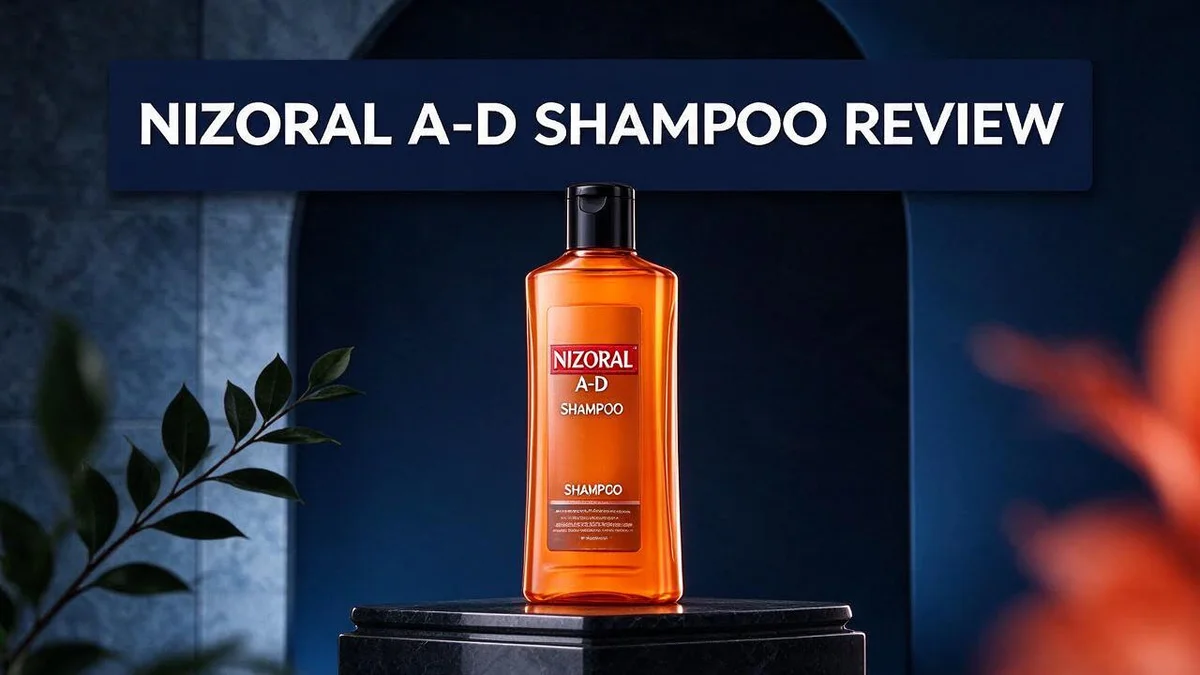
Nizoral A-D Shampoo Review: Is It Worth It in 2026?
If your scalp itches and flakes, you know how frustrating it can be. Many people search for a shampoo that actually works. Nizoral is one name that comes up again and again.
Nizoral contains ketoconazole 1%, an antifungal ingredient. It targets the fungus that often sits behind dandruff. Many reviewers say they notice less flaking within one or two washes.
This guide takes a closer look at the shampoo. We cover how it works and how to use it. You will also see who it suits and where it may fall short. We compare it with other popular options, like zinc pyrithione and selenium sulfide shampoos.
In a Nutshell
- Quick results: Many reviewers notice less itching and flaking within one or two washes. The maker also claims it works 10X better than a leading dandruff shampoo against dandruff causing fungus, though this claim is unverified.
- Simple routine: You use Nizoral A-D twice a week between your regular washes. You can keep your usual shampoo on other days.
- Beyond the scalp: People also use it for seborrheic dermatitis and fungal acne, which is also called Malassezia folliculitis. Talk to a doctor first if your rash is severe.
- Size options: Shoppers can pick a small 60 ml bottle, a 7 oz bottle, or a large 400 ml bottle for longer use.
- Hair loss concerns: One user lists hair loss as a side effect. Another says it does not help with male pattern baldness, so set realistic expectations.
- Other options: Zinc pyrithione shampoos like Head and Shoulders, selenium sulfide formulas, and Maple Holistics Sage and Tea Tree shampoos also fight flakes. Compare them to see which one fits your needs.
Key Ingredients

- Clinically Proven: Clinically proven to control flaking, scaling and itching from dandruff. Nizoral is so powerful it can even control severe dandruff.
- Controls Scalp Fungus: Nizoral is different because it doesn’t just address the symptoms, it gets right to the root of dandruff as it kills the fungus that causes it.

Last update on 2026-06-09 / Affiliate links / Images from Amazon Product Advertising API Some of the links on this website are affiliate links, which means that at no additional cost to you, I earn a commission if you click through and make a purchase. I only recommend products and services that I believe will add value to my readers. Thank you for your support!
Every shampoo depends on its key ingredient to do the real work. In this formula, the active ingredient stops yeast from growing on the scalp.
It blocks a substance that fungal cells need to build their outer walls. Without that wall, the yeast weakens and dies off.
Contact time is where many people go wrong. They rinse right away. The label suggests leaving the lather on for about three to five minutes. This gives the active ingredient time to work on the skin.
Think of it as a short treatment, not a quick wash. The ingredient needs time to reach the yeast. A fast rinse often leaves the job half done.
Dandruff often returns because scalp oil feeds yeast. Yeast grows fastest in oily areas. The cleansing agents in the formula help here too. They lift oil and loose flakes away from the scalp. This clears space for the antifungal to reach the skin.
Other dandruff shampoos take a different path. Many zinc based options focus on slowing how fast skin cells build up. This shampoo targets the fungus itself. That difference matters when yeast is the main cause of your symptoms.
Keep the label handy. Formulas and names can change over time. Always read the ingredient list on the bottle you buy. This confirms you get the same active ingredient you expect.
Test before full use. Some scalps feel more sensitive than others. Apply a small amount to a patch of skin first. Stop use if you notice burning, redness, or swelling.
Knowing how the ingredient works sets realistic goals. You understand that the product treats the yeast behind the flakes. Consistent use over several weeks gives the best outcome. Pair it with a gentle everyday shampoo to keep your scalp balanced.
Texture and Application
Medicated shampoos often feel thicker than everyday formulas. Nizoral follows that pattern, so it sits well in your palm.
Start with wet hair. Work the shampoo through your hair so it reaches the scalp, not just the ends.
Use small sections. Part your hair in a few places to make the job easier. Your fingertips do most of the work.
Massage gently with the pads of your fingers. Rough scrubbing can irritate an already itchy scalp. Gentle pressure feels kinder on sensitive skin.
Lather builds up quickly with a little water. Many people find the foam easy to spread. Too much water can thin the product, so add it slowly.
Watch for residue. A thick formula can leave a film if you skip rinsing. Rinse until the water runs clear of suds. Your hair often feels lighter after a full rinse.
Your hair type matters. Fine hair may feel weighed down by heavy product. Thick or coily hair may need a little more shampoo to cover the scalp evenly.
Before each wash, look at your scalp in a mirror. Note any redness or flakes so you can track progress over several weeks. A simple record helps you see real change.
Some people worry about hair color. Ask a stylist before use if you color or chemically treat your hair. A quick check can prevent surprises.
Keep the bottle upright in the shower. Thick formulas can cling to the cap, so wipe the opening after each use. A clean opening keeps the product flowing well.
Pair it with a gentle routine. Choose a mild shampoo for your regular washes on other days. This keeps your scalp balanced between treatments.
Use conditioner on the lengths only. Keep it away from the roots so your scalp stays clean. Your ends stay soft without weighing down your scalp.
Good application makes a big difference. Take your time, rinse well, and stay consistent. Your hair and scalp will respond best to careful habits.
Results and Effectiveness
Results with Nizoral shampoo often vary from person to person. Some people feel relief within days. Others need several weeks before they notice a clear change.
Watch the trend, not just one wash. A single good morning does not prove much. Track flaking and itching across two or three weeks instead.
Taking photos can help. Snap a picture of your scalp once a week in the same light. Side by side images reveal progress that memory often misses.
Results for seborrheic dermatitis can look different. Redness and greasy scales may calm down slowly. Expect steady improvement rather than an instant fix.
Consistency matters more than intensity. Using more product or leaving it on longer does not speed things up. Stick to the schedule you set for yourself.
The 10X claim needs context. The manufacturer says it beats the leading dandruff shampoo against dandruff causing fungus. That claim has not been independently verified, so treat it as a starting point.
Real world reviews add useful clues. Many users praise the outcome. Others report mixed experiences, so reading both sides helps set fair expectations.
Hair loss reports deserve a closer look. One user lists hair loss as a side effect. Stop use and talk with a doctor if shedding increases. Hair loss may also have other causes, such as stress or hormones.
Keep a simple log. Write down the date, the symptoms you notice, and any changes in your routine. Patterns become clear faster this way.
Outside factors can affect results. Stress, sweat, and infrequent washing may influence how your scalp behaves. Noting these factors helps explain good and bad weeks.
Know when to get help. If flaking, redness, or itching does not improve after several weeks, see a dermatologist. A professional can confirm the cause and suggest next steps.
Think of results as ongoing management. Fungal scalp issues often return without regular care. Many people keep a maintenance schedule to stop symptoms from coming back.
Top 3 Alternatives
Selsun Blue Shampoo

- Contains one (1) 11-fluid-ounce bottle of Selsun Blue Medicated Antidandruff Shampoo
- New cleaner formula* designed to leave hair soft and silky
Last update on 2026-06-09 / Affiliate links / Images from Amazon Product Advertising API Some of the links on this website are affiliate links, which means that at no additional cost to you, I earn a commission if you click through and make a purchase. I only recommend products and services that I believe will add value to my readers. Thank you for your support!
Selsun Blue is a popular choice for people with dandruff. The formula contains selenium sulfide, which slows the growth of yeast on the scalp. Apply it to wet hair, massage it into your scalp, and leave it on for two to three minutes before rinsing. Many users like its clean feel and familiar scent.
Neutrogena T/Gel Shampoo

- Neutrogena T/Gel Scalp Relief Anti-Dandruff Shampoo (150ml)
Last update on 2026-11-16 / Affiliate links / Images from Amazon Product Advertising API Some of the links on this website are affiliate links, which means that at no additional cost to you, I earn a commission if you click through and make a purchase. I only recommend products and services that I believe will add value to my readers. Thank you for your support!
Neutrogena T/Gel contains coal tar, which slows the buildup of dead skin cells. Dermatologists often suggest this formula for stubborn scalp flakes. It can leave hair feeling a little dry, so a good conditioner helps. Keep it away from your eyes and wash your hands after each use.
Head & Shoulders Shampoo

- 72-HOUR DANDRUFF PROTECTION: Head and Shoulders zinc pyrithione formula stays on your scalp after rinsing, keeping it working between washes. Up to 72 hours of protection, up to 100% dandruff protection, even on non-wash days, with regular use.
- FIGHTS DANDRUFF AT THE SOURCE: Dandruff is caused by Malassezia yeast deep in the scalp, not just at the surface. The 1% pyrithione zinc formula targets it where hides, fighting dandruff at the root cause rather than only treating the visible result.
Last update on 2026-11-16 / Affiliate links / Images from Amazon Product Advertising API Some of the links on this website are affiliate links, which means that at no additional cost to you, I earn a commission if you click through and make a purchase. I only recommend products and services that I believe will add value to my readers. Thank you for your support!
Head & Shoulders is one of the most recognized dandruff brands worldwide. Many versions contain zinc pyrithione, which fights the fungus linked to flaky skin. It cleans the scalp well and suits regular use. Using it two or three times a week often keeps flakes under control.
Scalp Conditions and Suitability
Not every flaky scalp is the same. Some flakes come from dry skin, while others come from yeast. Nizoral fits best in the second group.
Itchy, flaky scalps are the main target. People with white or yellowish flakes often notice less itching first. Relief can feel quick, even when the flakes take longer to clear.
Seborrheic dermatitis is another common match. This condition can cause red, greasy patches on the scalp, eyebrows, or the sides of the nose. Many people also see patches near the hairline or behind the ears.
Small bumps around hair follicles may also respond. Some people use this shampoo for itchy bumps linked to Malassezia folliculitis. A doctor should confirm the cause before you treat these bumps at home.
Scalp psoriasis looks different and needs a doctor. Thick silver scales and raised red plaques often point to psoriasis. A medicated shampoo may not clear these signs on its own.
Patch test before full use. Apply a small amount behind the ear or on a small patch of skin first. Wait a day or two and watch for burning, swelling, or rash.
Stop use and seek advice if problems appear. Stop using the shampoo if redness, pain, or pus develops. Call a doctor if the scalp feels hot or swollen.
Broken or badly cut skin needs extra care. Avoid rubbing the shampoo into open sores. Wait until the skin heals before using it on those areas.
Pregnancy and young children need medical guidance. Ask a doctor before use if you are pregnant, nursing, or caring for a child. A doctor can confirm whether this shampoo suits the situation.
Check which symptoms match before you start. Write down your main signs, such as itching, flakes, redness, or bumps. This list helps you and your doctor decide if the shampoo suits your scalp.
Pros and Cons
Pros
- Many reviewers notice less itching within a few washes.
- It works well on white or yellowish flakes.
- It targets the fungus behind many flaky scalps.
- It can help with seborrheic dermatitis and fungal acne.
- It fits easily into a regular shower routine.
Cons
- One user reported no help for male pattern baldness.
- One user listed hair loss as a side effect.
- It is not a fit for scalp psoriasis, which needs a doctor.
- It may not suit every flake because the cause varies.
Who Should Buy It
This shampoo suits people who want a targeted helper. It is not meant for everyday cleansing. Many people keep a gentle daily wash and add this one twice a week.
Shoppers who tried zinc or selenium often look for a new option. Zinc pyrithione and selenium sulfide are common choices. If those did not help, ketoconazole offers a different active ingredient.
Fans of plant based care may want to compare first. Maple Holistics formulas use sage and tea tree instead. Some people prefer those ingredients, while others want a clinical antifungal.
Readers who want a scalp boost may like it. It does not replace daily care. Think of it as a weekly step in a larger routine.
Skip it if you have known antifungal allergies. Ingredients matter for sensitive skin. Read the label and ask a pharmacist if unsure.
Daily washers may find this too much. It works on a twice weekly schedule. Other days call for a lighter routine.
Shoppers who want clear labels may appreciate the active ingredient. Ketoconazole is a known antifungal, so its purpose is easy to understand.
Mild cases may suit a home trial. Persistent or spreading flakes deserve a professional visit. A pharmacist can also guide you on next steps.
Shoppers who already use medicated shampoo might compare strengths. Ketoconazole sits in the antifungal group. Zinc and selenium work through different actions, so results can vary.
Readers who like to test one change at a time may enjoy this approach. Swap only the shampoo and keep other products the same. This makes it easier to judge what helped.
Gift shoppers may find it useful for family members with itchy scalps. Check first that they have no known antifungal allergy.
Shoppers who like routines can pick set days. Two fixed days each week make the habit easy to keep.
Choose it with clear goals. Decide what problem you want solved. If flakes and itch are your main concern, this option deserves a fair test.
Final Verdict
Our final verdict is that Nizoral is a solid pick for people who want a targeted antifungal wash. It earns trust because the active ingredient is clearly listed. Shoppers can see exactly what they put on their scalp.
The biggest strength is its focus. Ketoconazole works against the fungus that many people link to flaky, itchy skin. That focus sets it apart from general cleansers that only wash away oil and dirt.
Still, the manufacturer claim deserves a careful read. The claim of being 10X more effective than the leading dandruff shampoo is not independently verified. Treat it as a marketing point rather than a proven fact.
Individual results vary, so give the shampoo a fair test before judging it. Some people notice change quickly, while others need more time.
Use it as a helper, not a full routine. Think of this shampoo as a targeted treatment rather than a daily cleanser for everything. Pair it with your usual gentle wash on other days so your scalp stays comfortable.
Who should choose it? People who want a focused option for itchy flakes will likely find the most benefit. Those who need a mild everyday cleanser may prefer a gentler product.
Competitors are worth a look too. Zinc pyrithione options like Head and Shoulders and selenium sulfide shampoos serve a similar purpose. Maple Holistics formulas offer a plant based alternative for shoppers who prefer natural ingredients.
Our overall take is positive. Nizoral works well as a targeted antifungal option for many people. If your scalp does not improve after a fair trial, a dermatologist can guide your next step.
Clear labels also make comparison simple. You can check the ketoconazole content against other options on the shelf. That habit helps you choose with confidence.
In short, Nizoral earns a spot on the shortlist for many itchy scalp concerns. Give it a fair trial, watch how your skin responds, and decide for yourself.
Frequently Asked Questions
What sizes does Nizoral come in?
Nizoral comes in 400 ml, 7 oz, and 60 ml sizes. The small bottle works well for a first trial or for packing when you travel. The larger bottles suit people who plan to use it for a longer period.
How should I use it during each wash?
Wet your hair and scalp first. Work a small amount into the scalp with your fingertips, not your nails. Leave the lather on for the time listed on the label, then rinse well. Use it between your regular washes so the active ingredient can do its job.
Can I use it on other parts of my skin?
Some people use it beyond the scalp. Research shows it is also used for seborrheic dermatitis on other skin areas. Still, ask a doctor before using it on your face or on broken skin.
What should I do if it irritates my scalp?
Stop using it and rinse your scalp with plain water. Watch for redness, burning, or swelling. If the discomfort lasts or gets worse, contact a doctor right away. Mild irritation often fades once you stop the product.

Hi, I’m Hannah Foster, a tattoo trend expert and blogger. I’m passionate about body art and love sharing my knowledge and inspiration with others. On Glamour Hub, I’ll be sharing my favorite tattoo designs, trends, and tips. Follow me on Pinterest @Glamourhubblog to stay up-to-date on the latest in tattoo fashion.